
Van Rysel RCR-G Review: The New UCI Gravel Race Bike
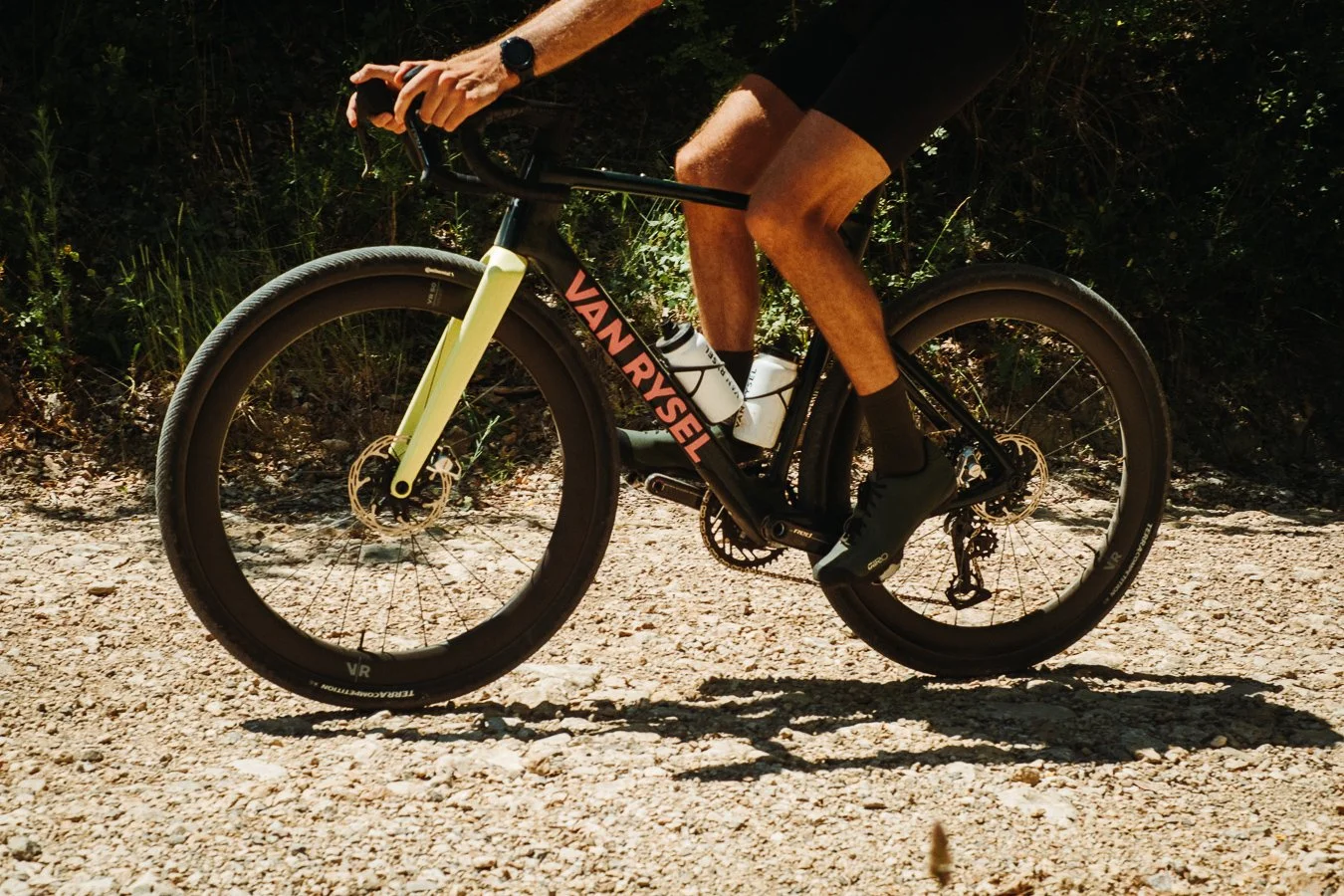
Van Rysel's new RCR-G gravel race bike has launched. I spent four days on it near Marseille in June — here's my thoughts..
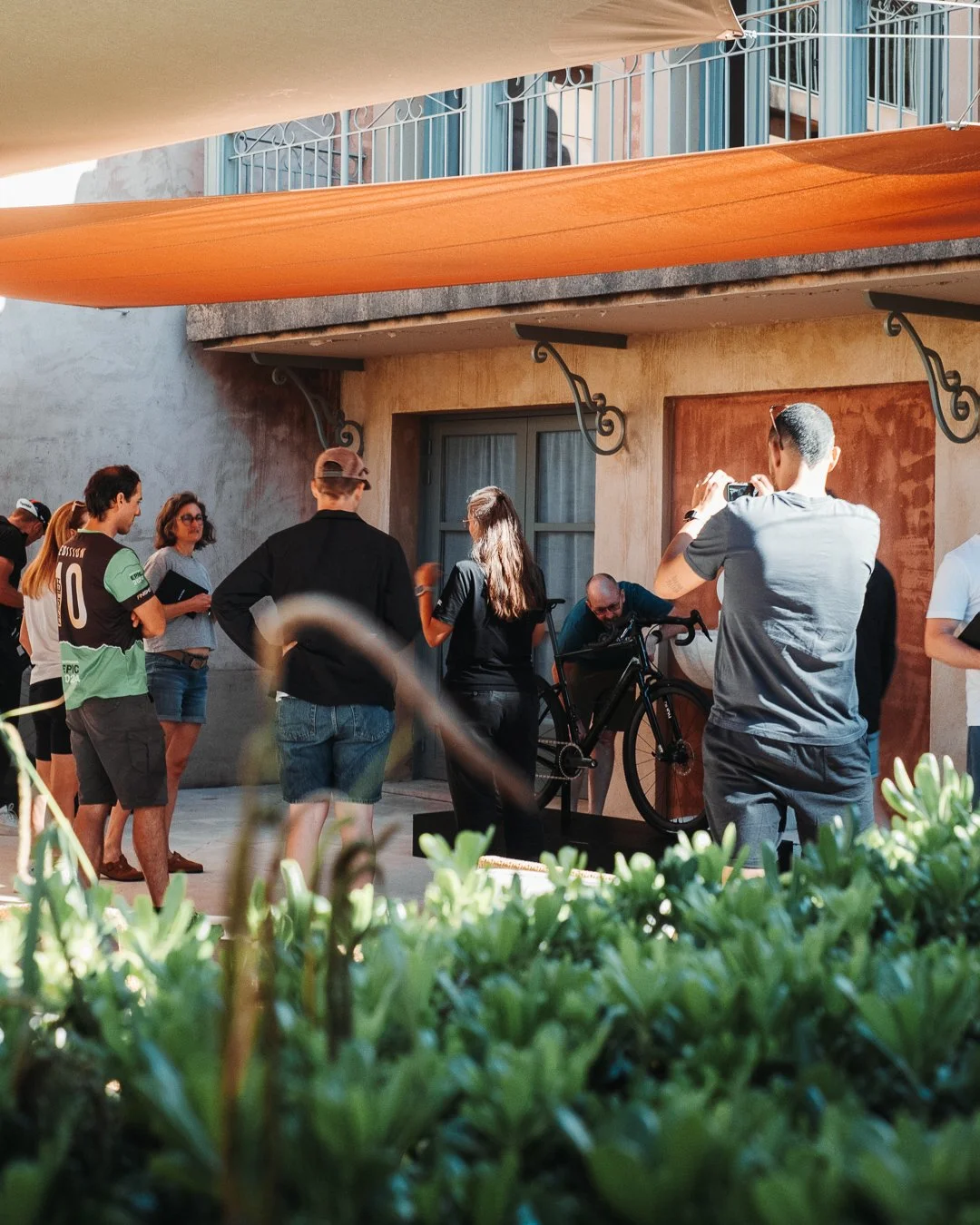
Back in June I got to "work" on the press camp for Van Rysel's new gravel bikes. Two of them: the RCR-G and the EDR-G. One's a race platform, one's endurance, the clue's in the names. This is about the RCR-G.
Some context and caveats first
While I've owned and ridden gravel bikes, most of my riding has been around London since the genre exploded, hardly a proving ground but I learned a thing or two over the my 40 years of cycling. My background, was riding those same trails on cyclocross bikes as a kid. I also raced MTB and spent a few seasons guiding and riding in Europe, so riding off-road isn't new to me. Having been part of the early MTB scene as it developed gave me a set of instincts I now find apply directly to gravel.
Gravel can be a bit confusing, the tech's constantly evolving much like the early MTB days, and there are multiple niches developing in parallel, even the top end races appear to be split, you have the Life Time races in the US and UCI events, the RCR-G is aimed at the latter. Ultra cyclists needing something else entirely. A boom in people travelling to ride events like The Traka, The Rift and The Gralloch, The Silk Mountain Race, GBDURO and many more. And then the weekend bridleway riders, like me. We all want something slightly different from the same three letters — G-R-L. It's all valid. So, with all that noted, and my usual dose of sarcasm and cynicism, here's what I think of the Van Rysel RCR-G, and of gravel more broadly.
The riding, before the bike
I spent four days north of Marseille with Van Rysel, riding and testing both platforms. With everything above in mind, I'll say this: what we rode was what I would call proper gravel, the kind everyone pictures when they imagine the genre, not the horse-shit angry walker bridleways of Surrey, Essex and Kent. Fast and technical, but not technical enough to need an MTB. I'm confident off-road although to be fair you could also say reckless and over confident. Essentially I came away with two major questions/ concerns and one was the choice of a road handlebar and the second 50 mm tyre clearance. I fully expect those to be highlighted in almost every review and comment on line.
There's a version of gravel that's about slowing down. Travel, experiences, mismatched bikepacking bags, a vague sense that speed is somehow missing the point. I like that version of gravel. It’s probably more me, or at least I thought it was.
The RCR-G isn't built for that version. It's built for the other one, the one where gravel got a UCI rainbow jersey, a World Championship, and a peloton that now averages north of 35kph on terrain that used to be an excuse to ride slower. Van Rysel's new frame is a direct answer to that shift, and it doesn't bother pretending to be anything else.
The brief behind the Van Rysel RCR-G
The brief, as far as I can tell from the white paper, was almost insultingly simple: build the fastest gravel frame you can, for a team that needs to win a World Championship on it. Not the most comfortable. Not the most versatile. The fastest.
That's a genuinely different design problem to the one most gravel bikes solve. Most gravel frames are still negotiating a truce between road speed and bikepacking practicality, clearance for big tyres, mounts for bags you'll never actually load with a rack and panniers, geometry softened just enough to forgive a bad line choice. The RCR-G skips the negotiation entirely. Van Rysel took the RCR-R, their road race platform, kept its front end almost wholesale, and adapted everything behind it for 50mm-ish tyres and a beating. It's less "gravel bike" in the bikepacking sense and more "road bike that's been told the road ends."
What's actually going on with the frame
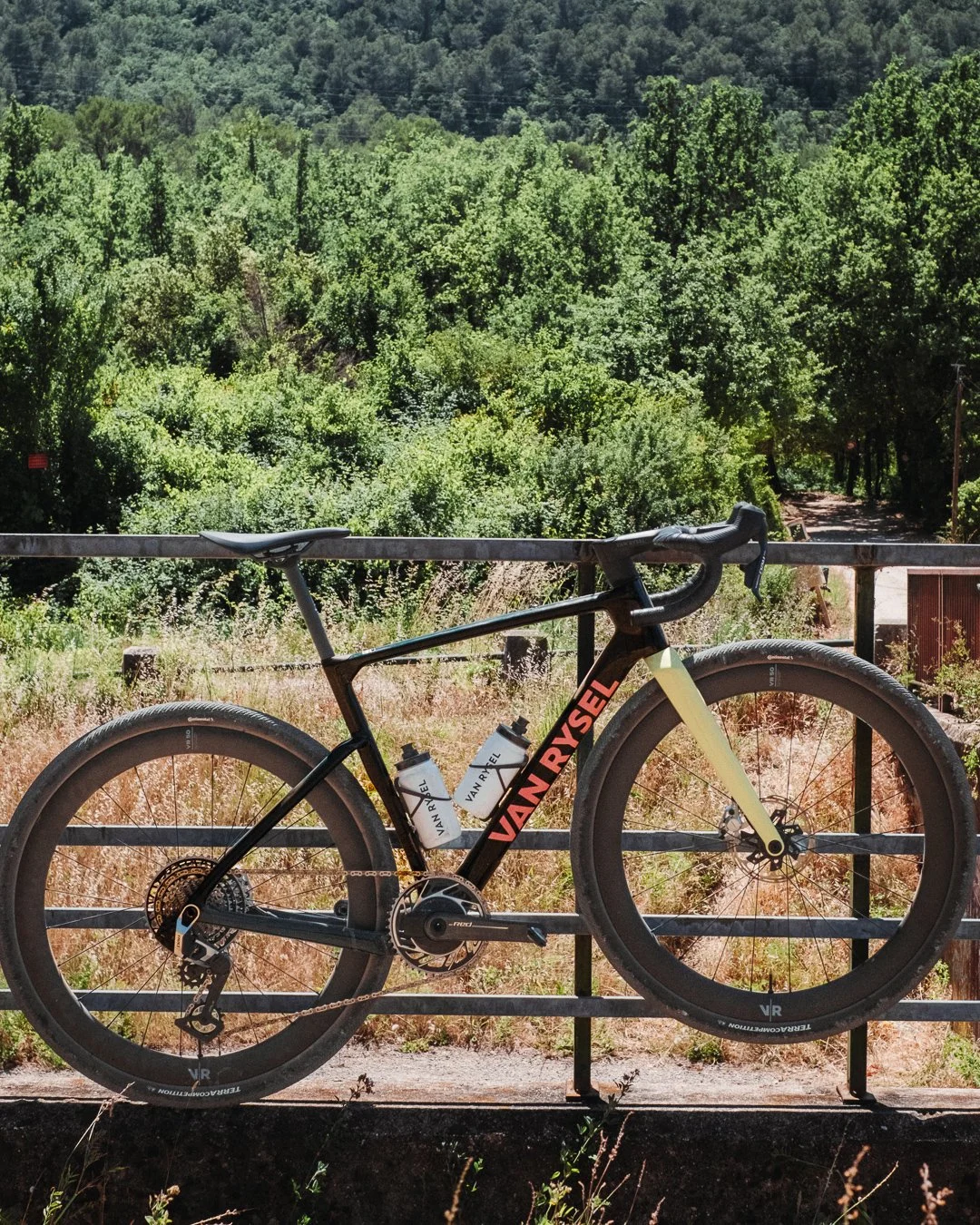
The numbers, for what they're worth: 885g for a size M frame, 417g fork, complete bike at 7.7kg in a SRAM RED build. Wind tunnel testing puts it 8.6 watts ahead of the outgoing GCR at 45kph, and 17 watts up on the RCR-CX. Tyre clearance runs to 50mm. It'll take a 52-tooth big ring in a double, which tells you everything about who this bike thinks it's racing against, road speeds, road cadences, road ambitions, on surfaces that occasionally try to throw you off the bike entirely.
The engineering story is less about invention than adaptation, and Van Rysel are upfront about that. The headtube and front triangle are carried over from the RCR-R's CFD work; the real problem was managing the turbulence a much wider tyre creates, and stiffening the rear end enough to survive impacts the road bike was never asked to absorb. The lay-up is reinforced in the zones that take the hits, the chainstays go asymmetric to fit a 50mm tyre around a 52-tooth chainring without lengthening the wheelbase, and there's a rubber guard bolted under the downtube.
None of this is dramatic. It's diligent. Two years of iteration with the Decathlon CMA CGM team, eight prototype lay-ups blind-tested against each other, riders picking apart stiffness distribution until they landed on something explosive out of a corner without being unrideable at speed. It's the same process that built the RCR-R and RCR-F PRO, which is either reassuring or slightly repetitive, depending on how many white papers you've read this year.
The bit I keep coming back to
What's more interesting to me than the frame itself is the honesty of the exclusion. Van Rysel says outright that this isn't a bikepacking bike, and doesn't pretend the omission is an oversight. No rack mounts beyond a third bottle cage and a bento box. No forgiving geometry for the days your line choice is bad because you're four hours in and tired. It's a race bike, aimed at people who are racing, and the marketing doesn't try to have it both ways.
I find that more convincing than the alternative, I admire the boldness, the gravel bike that claims to do everything, and as a result does the actual racing part at 60% effort. If you want a bike that'll carry you and a week's kit across a continent at whatever pace your legs and the wine allow, this isn't it, and Van Rysel isn't trying to sell it to you as that. If you're lining up at a UCI gravel qualifier wondering whether your bike is the reason you're getting gapped on the tarmac sections, this is built specifically to remove that excuse. Stan Dewulf says as much in the development notes, more or less word for word: no more blaming the bike.
Van Rysel RCR-G spec summary
Frame: High-Modulus (HM) carbon / 885g size M (unpainted) / UDH-compatible
Fork: High-Modulus (HM) carbon / 415g (unpainted)
Clearance: 50mm
Crankset compatibility: 1x up to 50T / 2x up to 52T
Mounts: 3x bottle cage bosses / 1x bento box
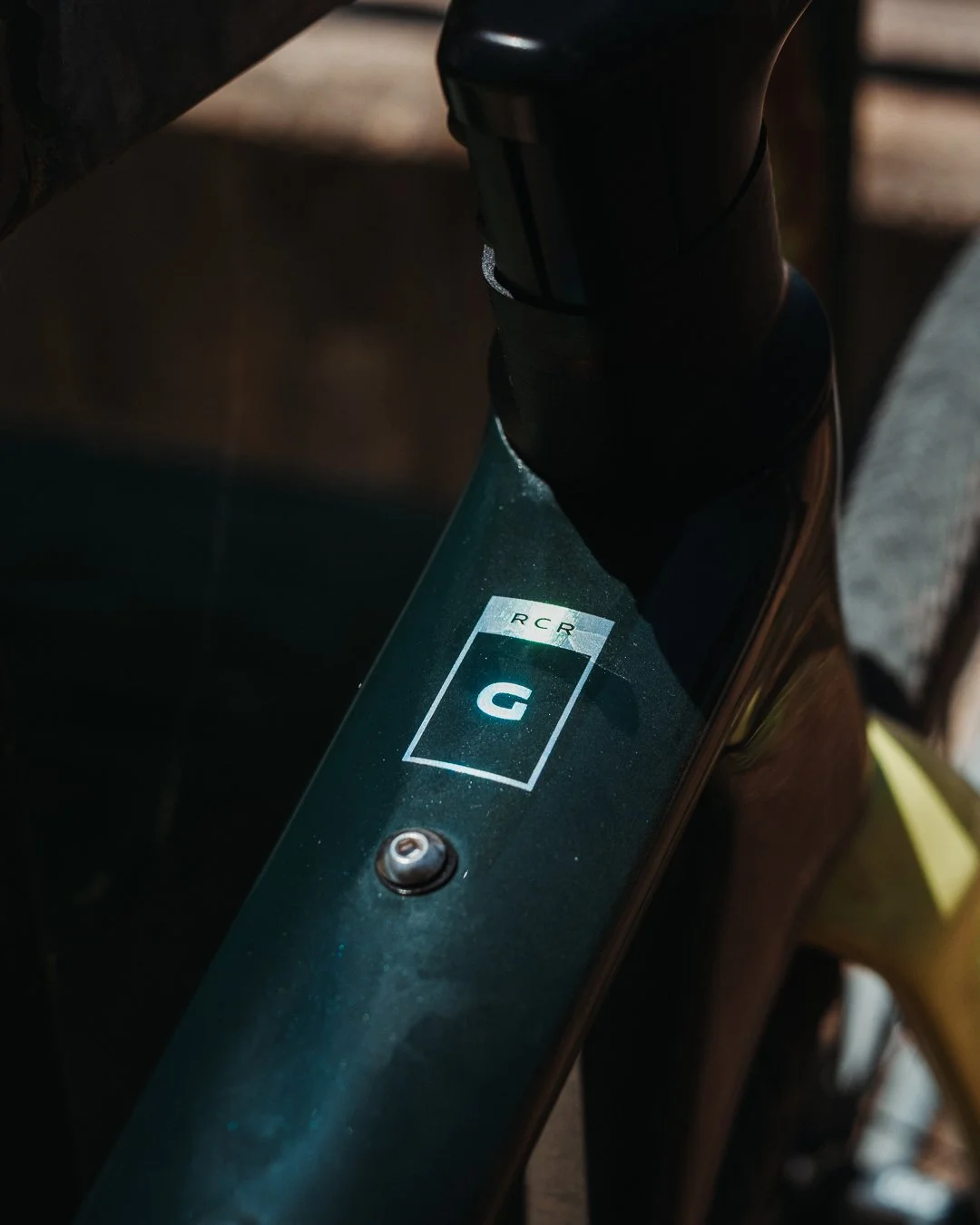
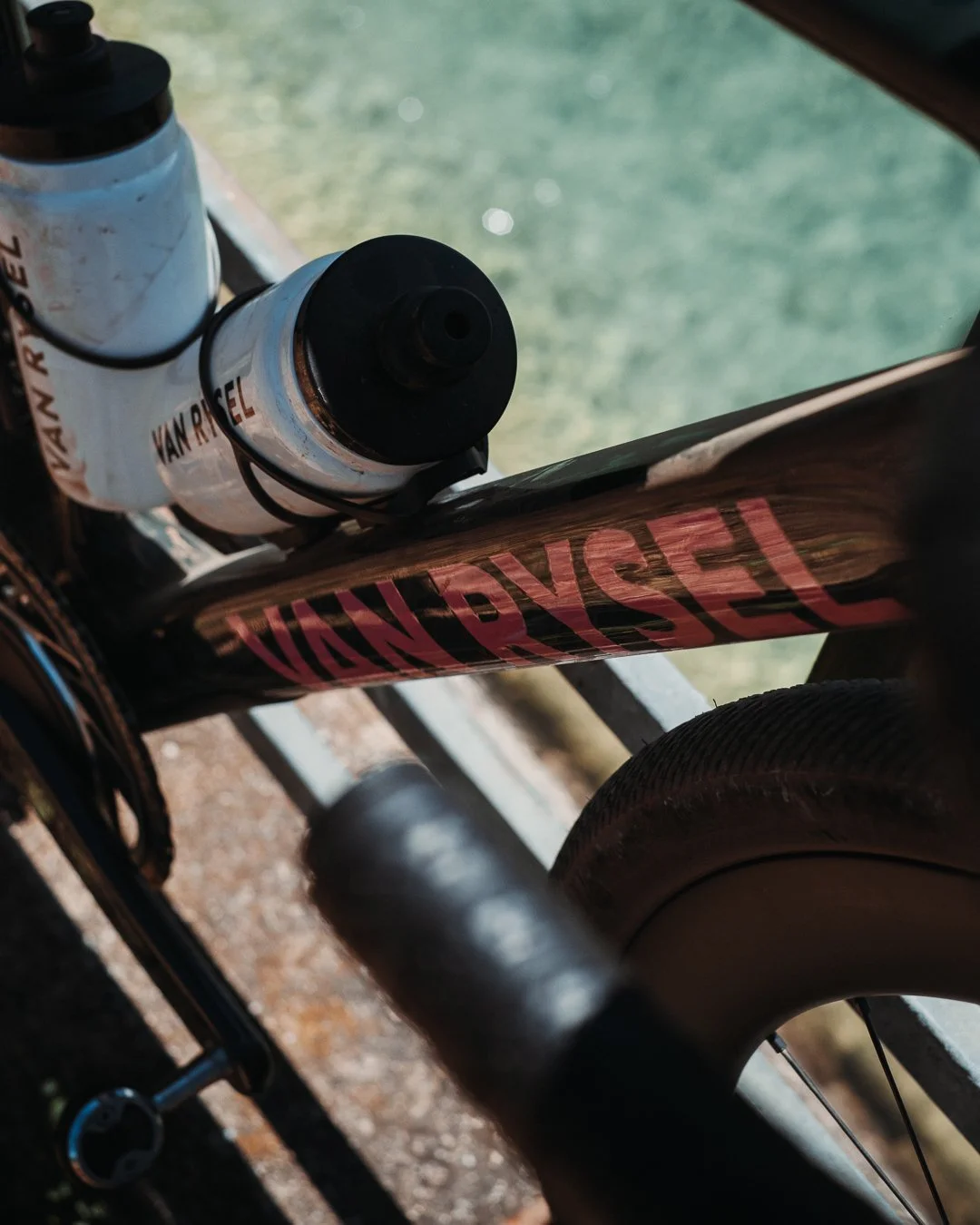
What it's actually like to ride
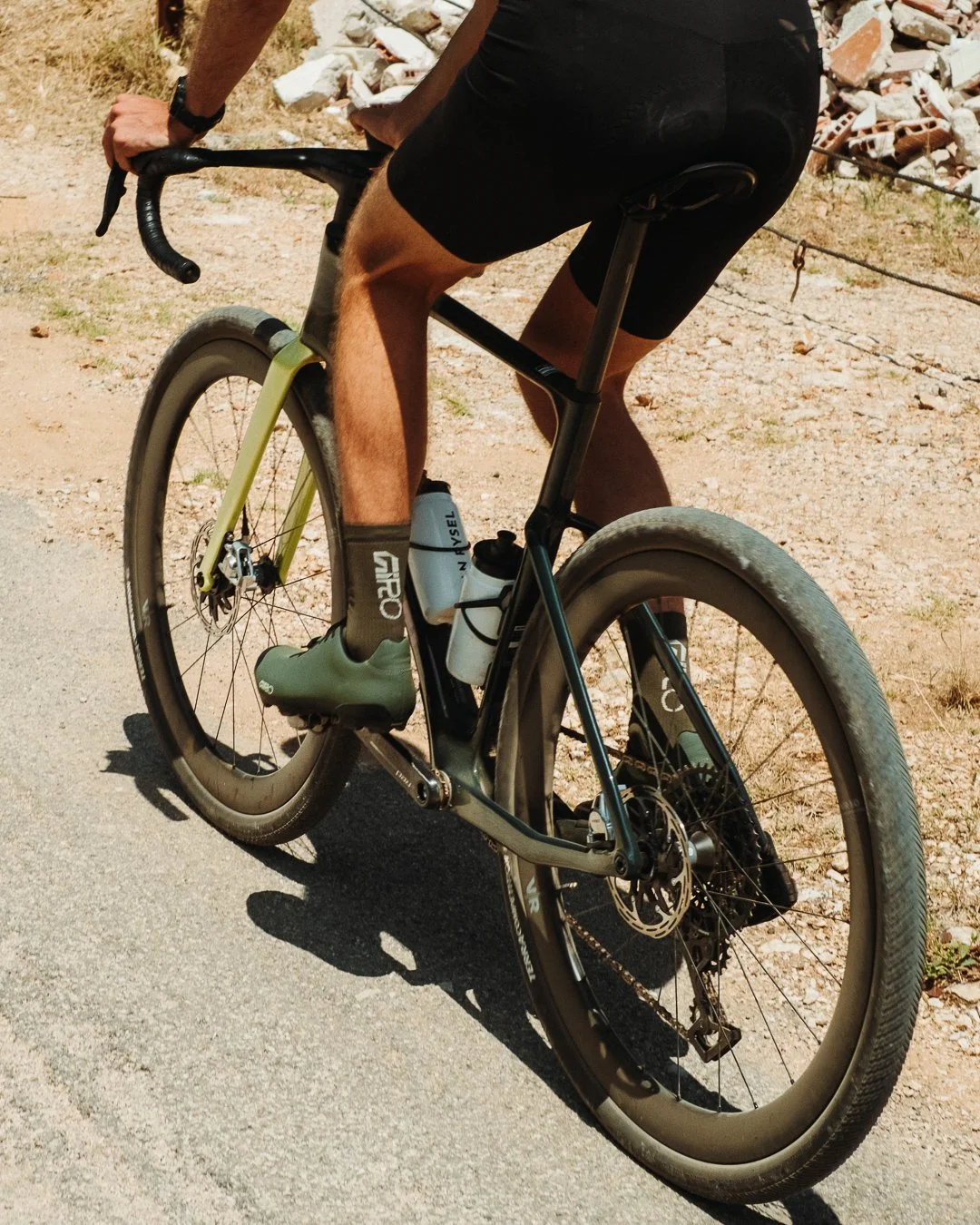
I rode the SRAM RED build and felt immediately at home, no surprise, given I ride an RCR Pro on the road. It accelerates the same way, the cockpit's the same unit, though personally I'd want more flare in the bars for control on technical situations and changing position at speed.
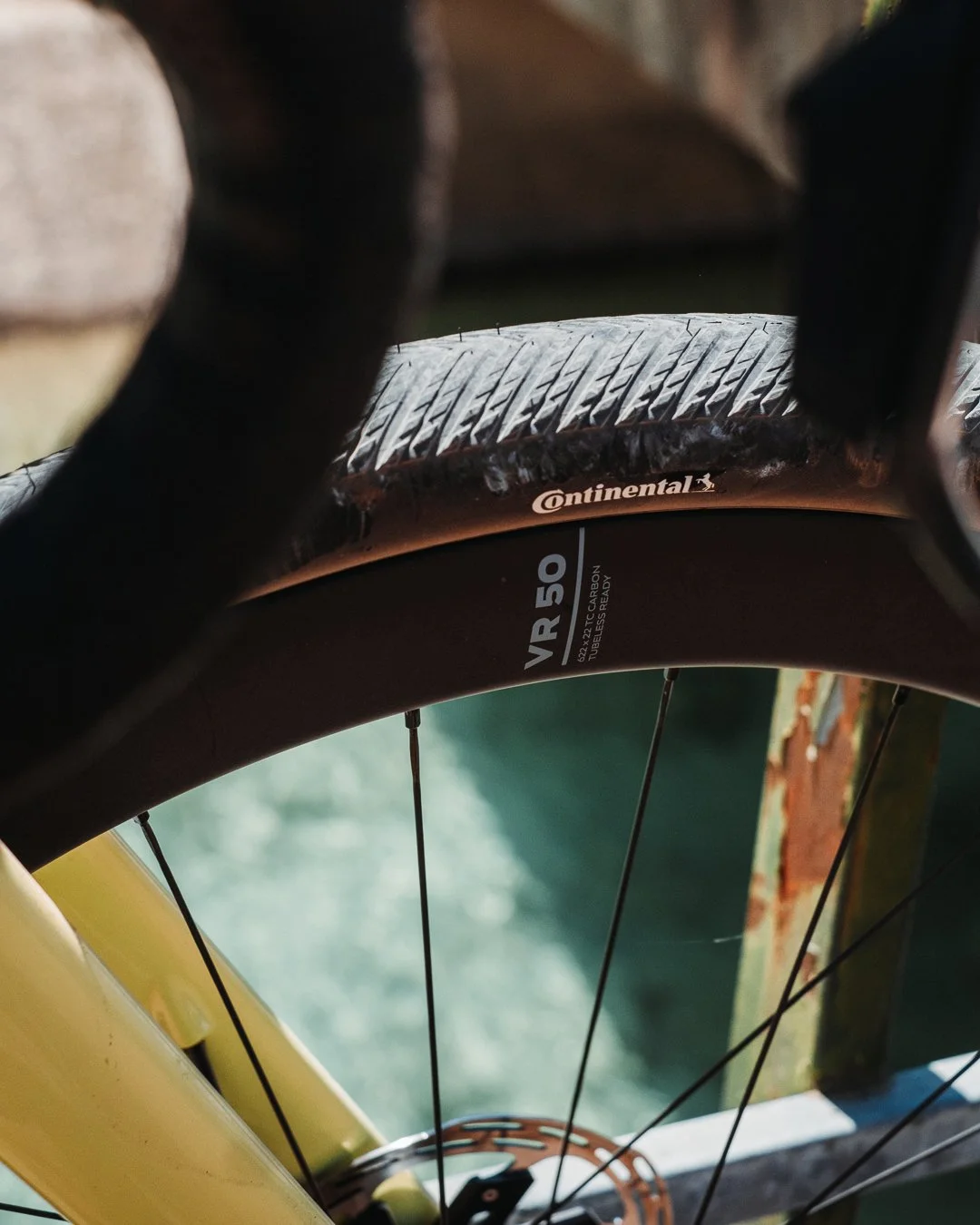
It felt light, lively, and climbed effortlessly. The 45 mm Continental Terra Race tyres dealt with the terrain we were riding and were fast, genuinely fast but I don't think they'd hold up or offer much grip for where I normally ride. Then again, I don't ride UCI events or race, so I'm not really the target consideration here, and neither is where I ride. The ride is firm and unforgiving and while I’m loving the fact that it mimics what I want I know for most it might be too harsh. Again Van Rysel aren’t targeting me, this bike has one very focussed target in mind the UCI Gravel World Champs. The VR50 wheels are not a gravel specific wheelset and while just about OK with the tyres supplied they did balloon a bit and gravel specific would have been more suitable, especially if you’re going to run 50mm. You could argue that this bike is half the price of the Specialized Crux and adding a second set of wheels would be a huge upgrade opportunity. Even then I’d probably go for the Force option at £4000 and swap out the wheels and maybe even the bars, then you’d have a more capable bike..
Why I actually rate this approach.
I like — no, love that brands are now stating plainly that bikes like this, aero bikes, race bikes, are designed with one thing in mind: to be as fast as possible, and designed racer first and consumer second. We can pick that apart, and the keyboard warriors no doubt will.I know I'll never buy an aero road bike, I'm not capable of riding it the way it was designed to be ridden. But I would buy a race-oriented gravel bike like the RCR-G, and here's why.
Most of my off-road rides start with getting to a "trail." On a 100km ride, 60–70km of that is on tarmac, and I don't want to be dragging a compromise of a bike around to do it. I want to ride as fast as I can to, on, and from the trails. If I can ride to Surrey or Kent at 30kph and then hoon around the trails, great, I won't be racing, but this bike, and this style of bike, will let me ride further and faster than I could before.
The RCR-G has genuinely made me more open-minded about the category as a whole. I already have trips booked up for Scotland and Provence over the next couple of months and when the EDR-G the more adventure focussed bike comes out I’ll look to see how that rides.
As ever, keep your eyes out on Instagram for updates and what this bikes like to live with. @ascnd.cc and @nickfrendo.
There are 3 models in the RCR-G range:
Sram Red AXS with integrated bar stem and VR 50mm carbon wheels - £6500
Sram Force AXS 2 piece carbon bar and alloy stem and VR 35mm carbon wheels - £4000
Sram Rival AXS 2 piece carbon bar and alloy stem and -£3000